
The Reckoning is Coming
Labour's failure to deliver means backlash is guaranteed. The only remaining question is: how bad will it get?

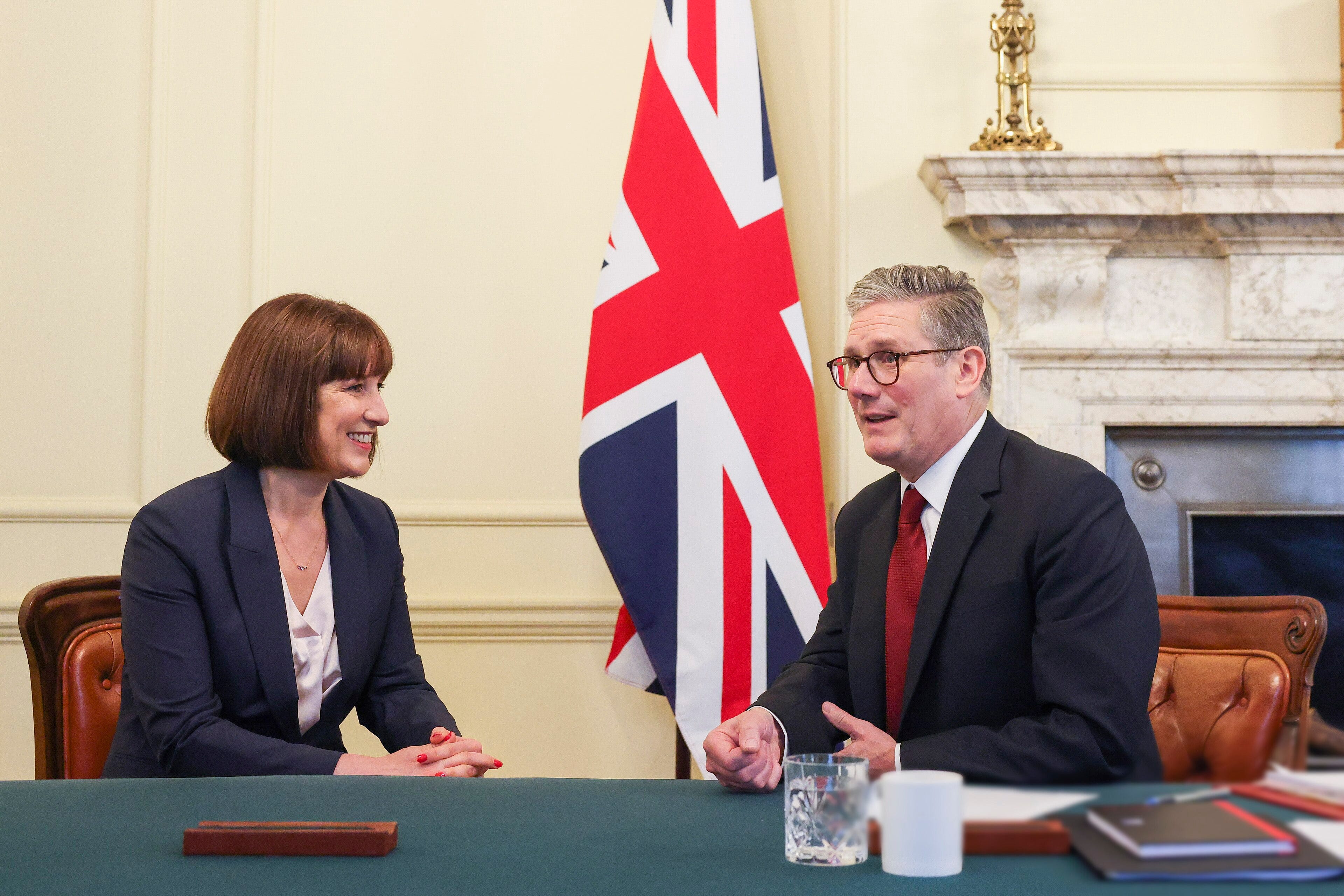
Labour have been in power for 18 months, but the UK public has yet to notice material improvements in their lives. With U-turns piling up and by-elections on the horizon, a reckoning is coming.
On July 4th, 2024, the Labour Party under Sir Keir Starmer won a large majority in the UK House of Commons, ejecting the Conservatives out of Downing Street after 14 years in power. With 412 out of 650 seats in Parliament, the new Prime Minister had a tremendous amount of headroom to push his agenda. For every vote in Westminster, Starmer would have an 86-vote margin-for-error.
And there was reason for the new Prime Minister to feel a sense of urgency. First, because the problems facing the UK - NHS wait lists, cost of living, housing shortages, asylum boat crossings - were actually urgent. The Conservatives were ejected after leaving these issues unaddressed for years, instead haggling Brexit and playing musical chairs with five different Prime Ministers. The new Government had to dig out of a hole.
The second reason Starmer needed to move quickly was because his ‘honeymoon’ with the public and political capital in Parliament was expected to be short-lived. After all, Labour’s large majority was won via a first-past-the-post system - 60%+ of seats in the House of Commons was gained via only 34% of the popular vote.1 Rather than seeing results as a solid mandate, the consensus view was that a modest plurality of voters was giving Labour a skeptical chance. Without plugging holes from the get-go, Labour’s boat would leak a little more each day.
And there was a final reason, a democratic one. Thus far, the UK had been spared the splintered politics plaguing European democracies due to new populist parties of the left and right. With the vote-share of ‘establishment’ parties of the center-left and center-right chipped away in France, Germany, Austria and the Netherlands, the ‘big-two’ of the UK, Conservatives and Labour, remained strong; a swing from from the former to the latter in the 2024 election appeared a standard adjustment in a seemingly stable political system.
And thus the ‘democratic bargain’ was renewed one last time with UK voters. They evicted the Conservatives, and in exchange gave Labour one last chance on behalf of the establishment. Mess it up, and the next election would see massive support for populist alternatives, just like in continental Europe.
The task was simple: be decisive. Make change felt so the UK’s political system doesn’t fall into the abyss.
And so which priorities did Prime Minister Starmer set? Which legislative victories were achieved? To which crises did he rise to show his leadership in tough circumstances?
None. The answer is basically none.
Aside from a rather quick and punchy response to President Trump degrading the UK’s Afghanistan and Iraq veterans (Trump said they “stayed a little off the frontlines”), Starmer has been on the back-foot since arriving in Downing Street.
A little over a year and half in power has resulted in sluggish economic growth, various policy U-turns2, alienation of grand swaths of the parliamentary Labour Party, and record-low public approval ratings.
To top off all this doldrum, the last weeks have seen a rise of Epstein-inspired chaos:
Starmer’s former Ambassador to the US, Peter Mandelson, emerged in newly released Epstein Files. The crescendo came when Starmer was forced to admit during PMQs that he knew Mandelson had an ongoing relationship with Epstein after Epstein’s arrest. The Prime Minister appointed Mandelson as Ambassador anyway.
Resignations in Number 10 followed, widely seen as attempts to spare the Prime Minister. Starmer barely kept his job after a ‘reset’ meeting with the parliamentary Labour Party behind closed doors.
Matthew Doyle, Starmer’s former head of communications, was suspended from the Labour Party after it was revealed he too had maintained relations with a former councillor charged with child sex offenses. Oh, and Starmer appointed Doyle to a lifetime peerage in the House of Lords, even while reports emerged in the media about Doyle.
The most recent bout of nonsense came when Reform under Nigel Farage sued the Labour Government over the postponement of 30 local elections. At first, the Government told local authorities not to worry; it expected to prevail in court. However, after it became clear the Government would actually lose in the High Court, they reversed course, told local governments to plan the elections on short-notice, and paid Reform’s lawyer fees.
Farage was giddy yesterday when he called Starmer’s most recent U-turn, “a huge victory for democracy and Reform.”
Bringing it all together
Starmer has kept his job as Prime Minister for now, though many suspect Labour parliamentarians simply want to keep him long enough to blame him for expected defeats in upcoming local and regional elections in Birmingham, Manchester, Scotland and Wales. Once Labour has been trounced, Starmer will be gone.
But I’m not writing this to finger-wring about Labour’s electoral prospects. I’m here to repeat analysis I gave just before the July 2024 General Election:
the challenge for a new Labour Government will be to be effective enough to stave off a right-wing populist resurgence, from a new group like Reform, or from a post-defeat smaller, revamped Conservative Party. Labour can’t be so centrist as to change nothing.
Labour has, in the public’s eyes, changed nothing. They’ve picked up where the Conservatives left off, with technocratic tweaks and intra-party fighting. If they stay on this path, they all but guarantee the subjection of the United Kingdom to a splintered national vote between Labour, Reform, Conservatives, Greens, Lib Dems, SNP and Plaid Cymru at the next General Election.
With Reform leading polls, that means the UK public will be in the position of trying to put together an ‘anti-Reform’ tactical voting scheme; rather than selecting a government of preference, they’ll be opting for the ‘least worst’ option, hoping some narrow majority can be cobbled together after the dust settles.
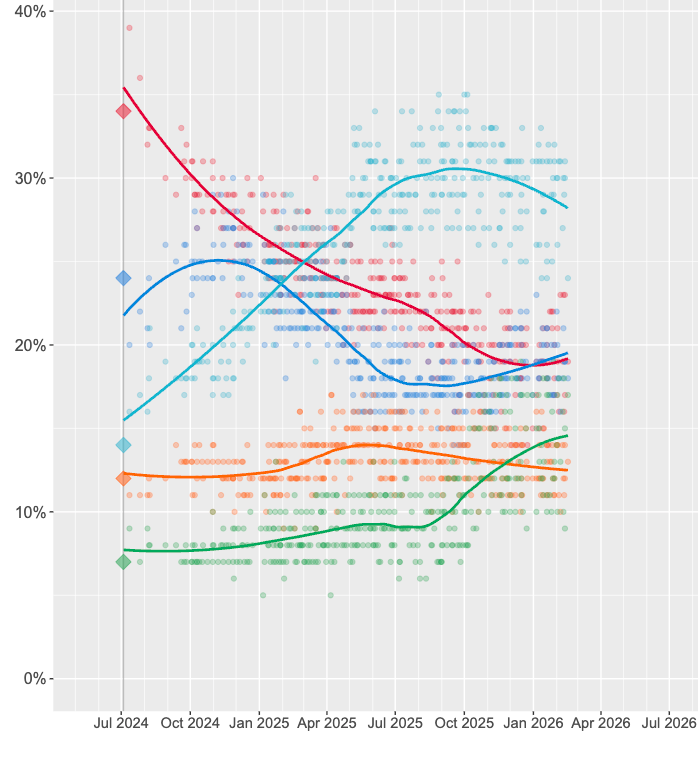
And we all know things snowball from there. With narrow majorities (or even coalitions), governing becomes even more difficult. And ineffective governance leads to more popularity for populists, thus more vote-splitting - on and on the cycle goes.
In other words, the UK is set to become the next European country to jump into the populist abyss.
It didn’t have to be this way. Labour had a whopping majority after the 2024 Election. They could have sprinted off with a clear agenda prioritizing noticeable material benefits for the population.
But thus far they haven’t. And so we’re here.
The Reckoning is Coming.
Heads held high, happy warriors. Later y’all.
-Will

https://www.bbc.com/news/election/2024/uk/results
two-child cap, winter fuel, digital ID, budgets messes with Reeves, and most recently, local election timing via expected court defeat.
Your analysis is spot on. I fear farage will continue to gain popularity. As Russell brand once said "he's a pound shop enoch powell"